I’m busy making spa wraps for Laurel’s 10 birthday party guests and their AG dolls. Then I’ll start embroidering button covers for my Hope Yoder button-up machine. They will be attached to ponytail holders but the girls will do that at the party. Lots of fun, but nothing to show or report now. So once again, I am posting one of Judy Day’s projects.
Her 8 year-old granddaughters are just 3 months apart in age. Making gorgeous, matching birthday dresses, along with gorgeous matching doll dresses and hairbows is an annual challenge for their long-distance grandmother. Of course, there are also matching Christmas and Easter dresses. If you haven’t seen Judy’s lovely creations, click on Judy Day’s Creations in the menu on the right.
As happens so often, Creative Needle magazine provided the inspiration for the birthday dresses. Judy told me that the Sept./Oct. 2001 issue had been waiting its turn on her cutting table since before the girls were born. That’s where she stacks “I definitely want to make that!” ideas. Continue reading →
If becoming a grandmother was only a matter of choice, I should advise every one of you straight away to become one. There is no fun for old people like it! ~Hannah Whithall Smith
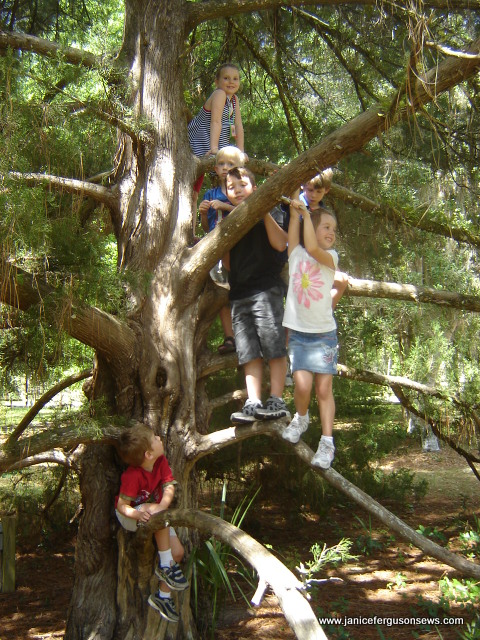
After spending the morning at the nearby wildlife refuge, grandchildren Robert and Laurel ( two uppermost tree climbers, striped shirt girl and tow head boy), stopped by with their friends and mothers. I’m telling you, grandchildren are SO MUCH FUN!!!
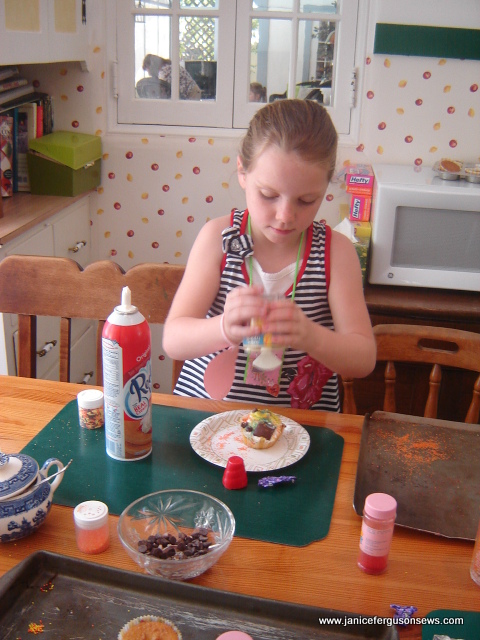
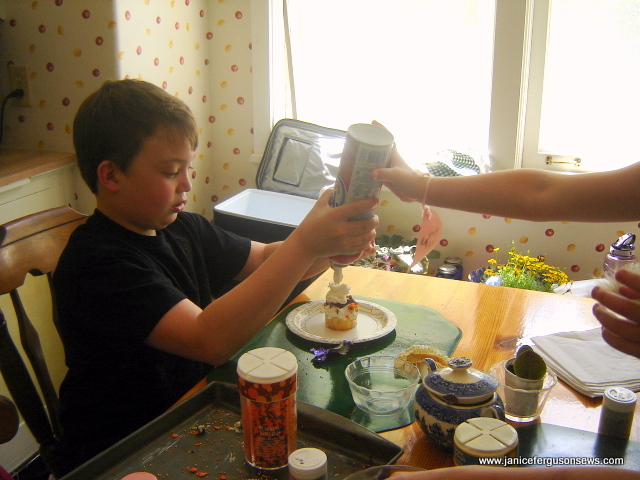
After a quick lunch which their mothers had packed, the first activity was decorating cupcakes I had baked for their dessert. It was just like Cupcake Wars on tv!
With bags of buttercream frosting, tubs of sprinkles, cans of whipped cream and bowls of chocolate chips and mini marshmallows, they had all the fixin’s for prize winning cupcakes. Laurel’s design philosophy is “too much is seldom enough.”
Brett was of the same persuasion. How can more not be better? Continue reading →
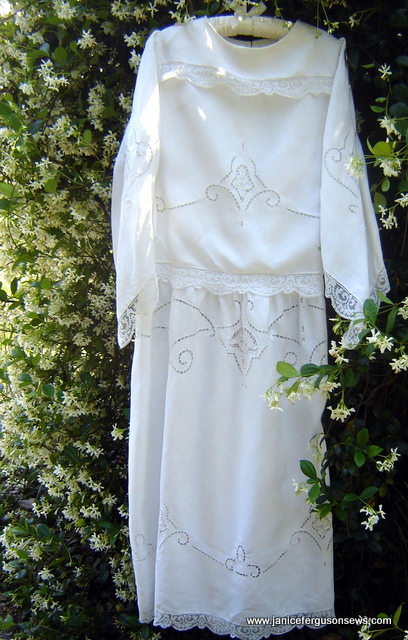
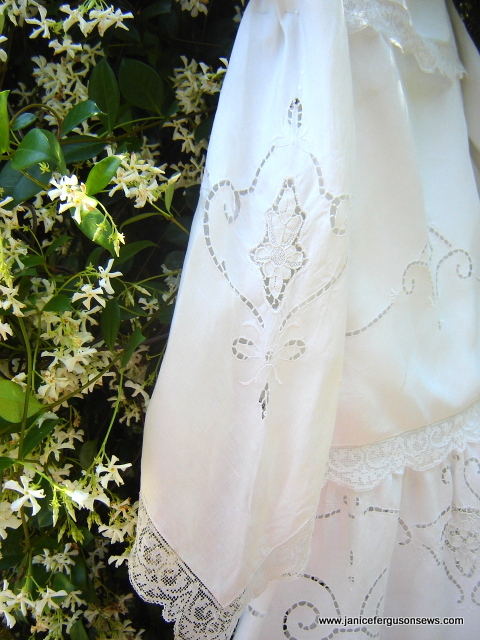
This is an amazing dress, an example of what I would call heirloom recycling. Whoever made this dress embraced the “green” philosophy–or simply needed a white dress and had a pretty tablecloth. Whatever.
On a yard sale/church bazaar Saturday outing, a mother/daughter duo came across this dress. Well aware of my penchant for antique textiles, the shopping duo decided then and there to gift it to me.  What wonderful friends! And, of course, I was delighted.
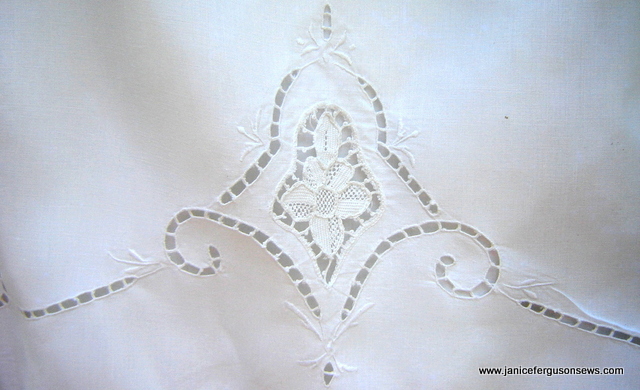
front bodice motif
Remarkable for a number of reasons, the dress is made from a beautifully stitched fine linen tablecloth. It was not immediately obvious that the cutwork, surface embroidery and needle lace inserts were not embellishments meant for a special gown.
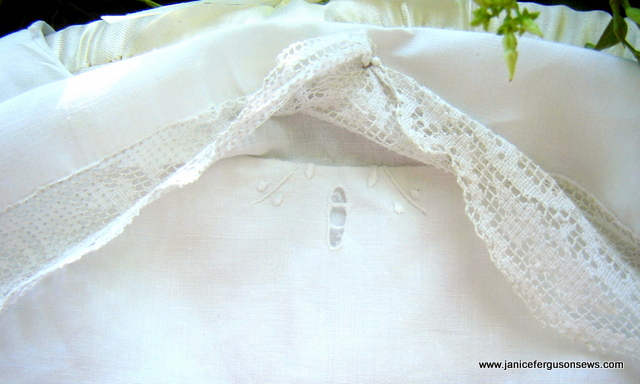
My first clue that this was a tablecloth was when I discovered the embroidery at the neckline, under the bodice overlay. Hmmmmmmm….no reason to embroider there.
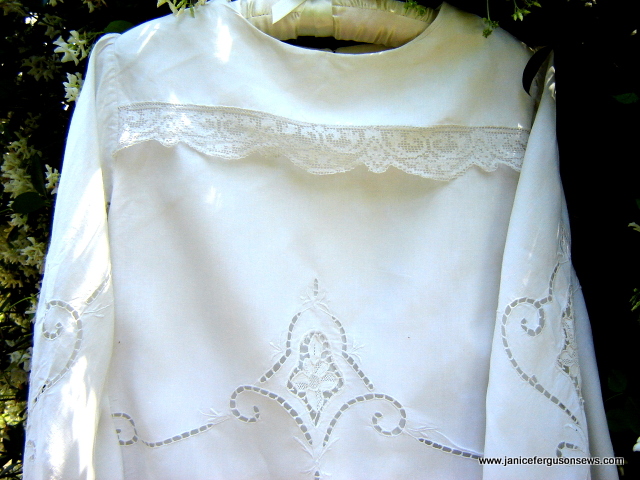
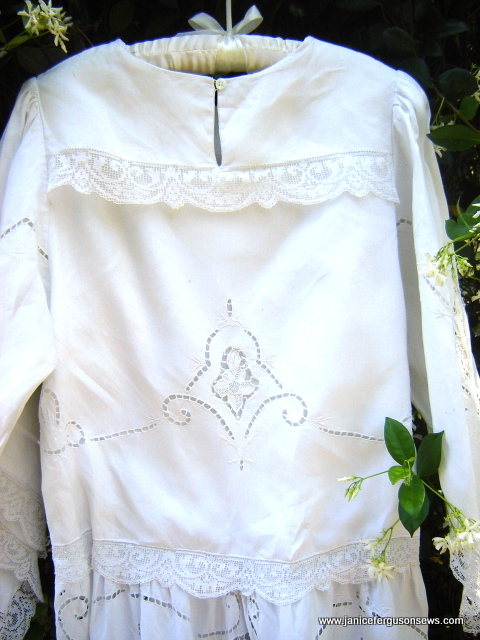
It is pieced together so artfully that the placement of the designs and the needle lace seem well planned for a dress. The skirt was cut so that the cutwork lines up at the side seams. The unusual sleeve style incorporates a corner of the cloth.
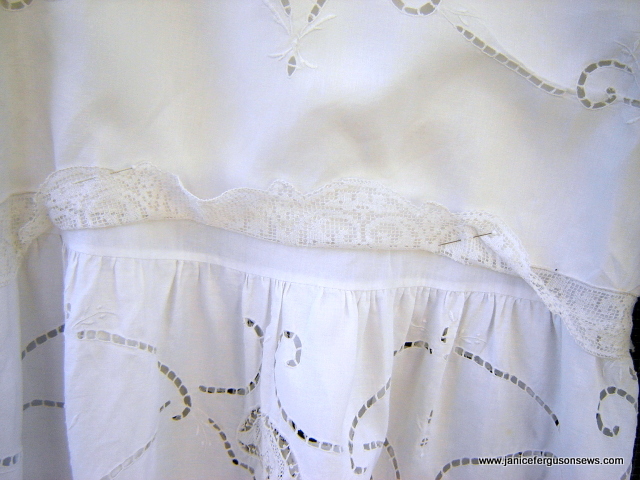
At the upcoming mother-daughter church luncheon, a display of vintage wedding gowns and dresses will be featured. So I pulled out the dress and proceeded to launder it. That’s when I discovered the embroidery at the neckline and the non-standard skirt attachment.
Close examination convinced me that the cutwork and embroidery were done by someone other than the seamstress who constructed this garment. There is a noticeable disparity between the workmanship of the handwork and the construction.
This is most noticeable with lace attachment. It is simply straight stitched onto what appears to be a machine rolled and whipped edge at the hem and sleeve edges.
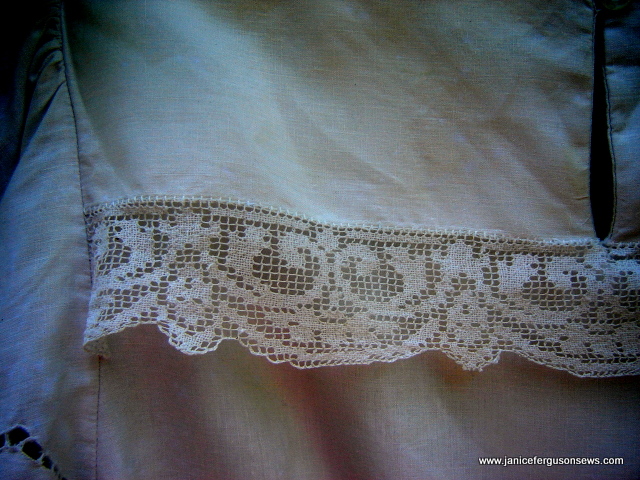
However, on the front and back yoke overlays, which are lined, it is very nicely hand stitched.
The color has been edited to show stitches joining lace to overlay.
It seems to me that the short opening at the center back would make it very difficult to put the dress on. But it’s likely that the seamstress/designer didn’t want break the horizontal line of the lace on the overlay.
Of course, I wonder for what special occasion was the dress made? It could have been a confirmation or graduation dress. It even could have been a wedding dress. Whatever.
Scarlet O’Hara would have found this a welcome, comfortable change from her velvet drapery dress.
In the previous post, Pin Stitch…What’s it all about? basic information was given about fabric, needle, thread, foot and fabric preparation. There was more, because pin stitch is one of my favorite techniques. And my writing style can be summarized as why-say-in-a-sentence-what-could-be-said-in-a-paragraph? But I bet you already knew that.
This is part II with how-to details and applications for this classic stitch. I hope it is more useful than boring.
NITTY GRITTY HOW TO–After reading all this background and materials preparation info, you are probably wondering HOW DO YOU DO IT???? Finally, we get down to it.
Lace edging is pin stitched to the sleeve of a shadow smocked dress, as detailed a few posts ago.
Just a few days ago, Lindsay wrote, “ Would you post or share you technique for pin stitching. Needles, setting, fabric and lace prep, thread, machine, etc.?” So this post is dedicated to Lindsay and her inquiring mind.~~~~~
Some time ago, I promised a tutorial post on pin stitch and now it’s time to address this question. In my humble opinion, few machine-made embellishments for classic clothing have as much aesthetic impact as the most common hemstitches, pin stitch and entredeux. So, for those of us who love to create such garments, it is important to know about these two machine made hem stitches.
Since this is a very broad topic, this post will deal only with pin stitch. As a matter of fact, it will take two posts for pin stitch. Some time later, I will talk about entredeux.
Also known as point de paris and Parisian hem stitch, is a stitch made by both hand and machine. This discussion deals only with machine made hem stitches.
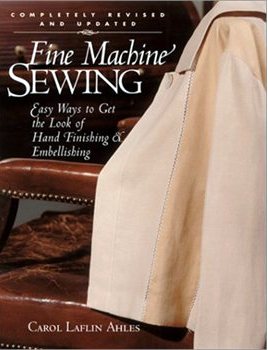
First let me give you a brief overview of this stitch. Much of this information is taken from Carol Ahles’ excellent reference book,Fine Machine Sewing.
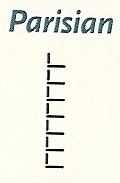
DESCRIPTION: Pin stitch is described by Carol as a stitch pattern that resembles the letter “L” (or when mirror imaged, a reversed “L”) repeating the vertical stitches and on some machines, the horizontal stitches.
It looks like this in the machine stitch menu. On several machines I have used, this requires 8 stitches for each hole, which appears at the left end of the horizontal stitch. A good starting point for settings is W. 2.5 and L. 2.5. Don’t be tricked into using a stitch that has two horizontal stitches. Those are usually for applique’ and will not give the same look as a genuine pin stitch. Continue reading →
Judy is as skilled at gardening as she is at sewing. Just look at this spring scene in her back yard!
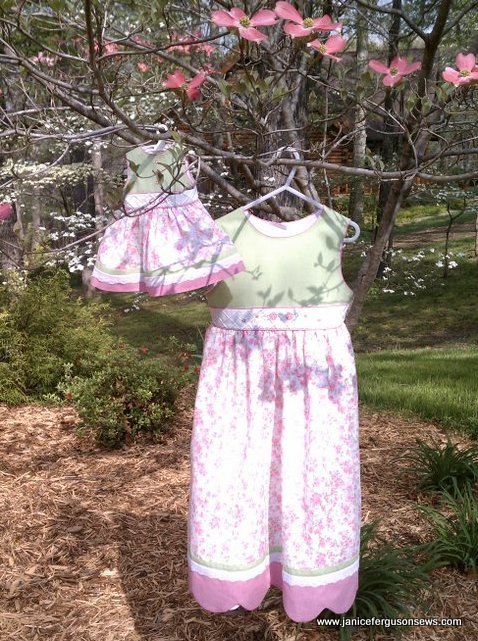
Judy Day has continued her tradition of gorgeous Easter dresses and hairbows for both of her granddaughters and their dolls. These are very different from the heirloom confections she has always made.  But as we all know, as little girls grow a little older, they like contemporary garments.Â
Here is Judy’s tale of how these dresses came about.
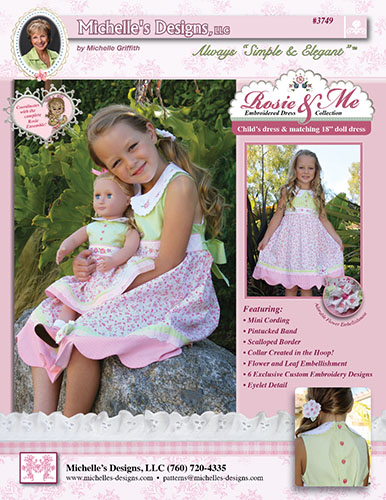
This idea for this year’s Easter dresses for my DGDs actually started last summer when I was asked to make a store sample for B Sew Inn (BabyLock dealer)in Springfield, MO. I fell in love with the dress from the picture on the front of the book, “Rosie and Me“ by Michelle Griffith.
Sometimes, it seems that all my posts overlap. This is one of those times.
When I blogged about the shadow smocked Easter dress for my granddaughter, I mentioned that I would tell you about the lace I used. And I will.
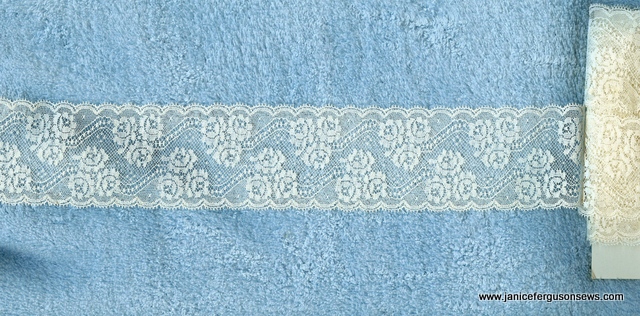
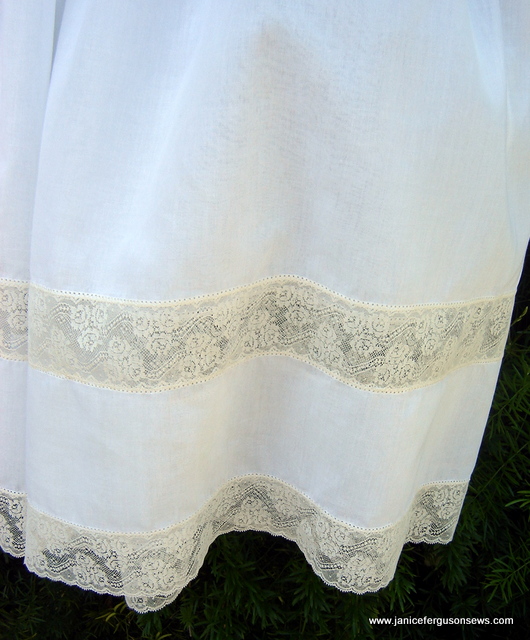
As I was gathering my thoughts, it occurred to me that the most interesting thing about the lace is the use of the galloon as insertion. So I want to tell you about that and other galloons I have used for both insertion and edging.
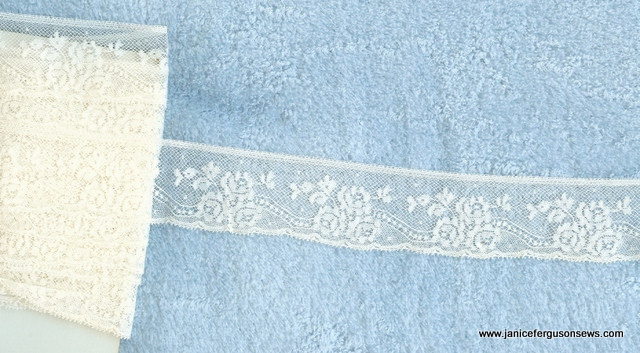
French Val galloon, with two decorative edges, 1-3/4″ wide
The antique lace I used for my granddaughter’s Easter dress was purchased at a veritable once-in-a-lifetime estate sale where I still sometimes shop when I am in Dreamland. The creamy French Val lace is a beautiful ivory color, achieved by age rather than dye. Two bolts of a classic pattern available yet today came home with me.
French Val edging, 1-1/4″ wide
I found the intricacy of the pattern in combination with the gentle color to be very pleasing. But I needed insertion for the skirt.
If you look carefully at the scalloped edges on the galloon, you will see how easily it converted to an insertion. Without the perfectly straight lines of traditional insertion, the galloon requires a little more care when it is stitched to the flat skirt fabric. But it certainly passed.  The soft curve of the scallops make this do-able. More dramatically curved edges would have been a major challenge.
I was so pleased with the finished look of the buttons on my granddaughter’s shadow smocked Easter dress. It was a stroke of luck that they surfaced as I pillaged through my bag of pearl buttons. I had forgotten all about them.
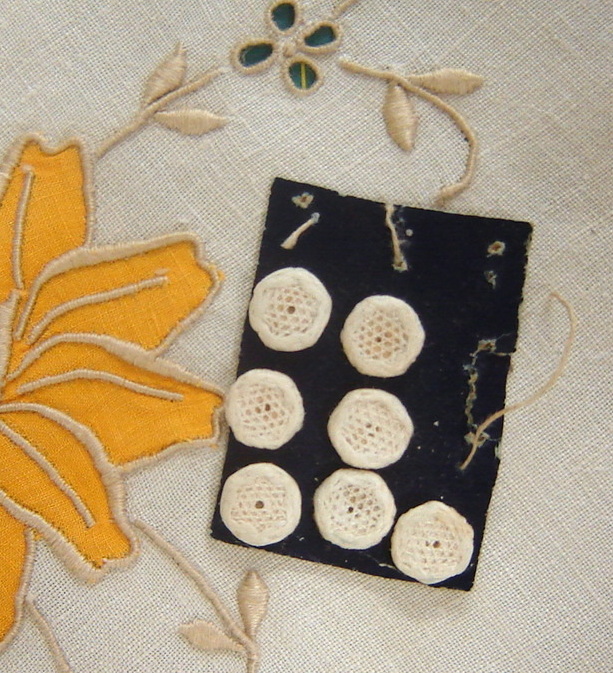
Purchased many years ago at an antique mall with an extensive needlework/notions booth, I had no plan for these interesting buttons. There is no shank, just threads wrapped from side to side, as if the fibers were stitched over a ring. But the ivory color seemed to work for this dress with the ivory lace, entredeux and featherstitching. Continue reading →
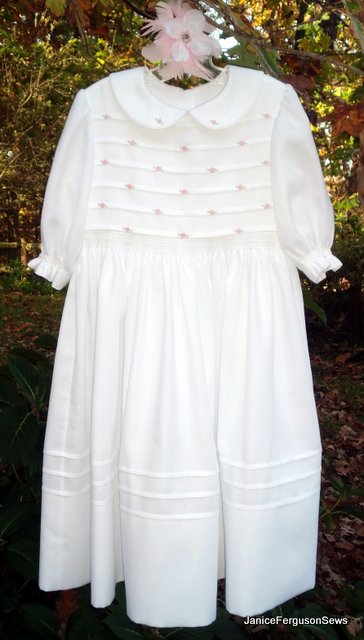
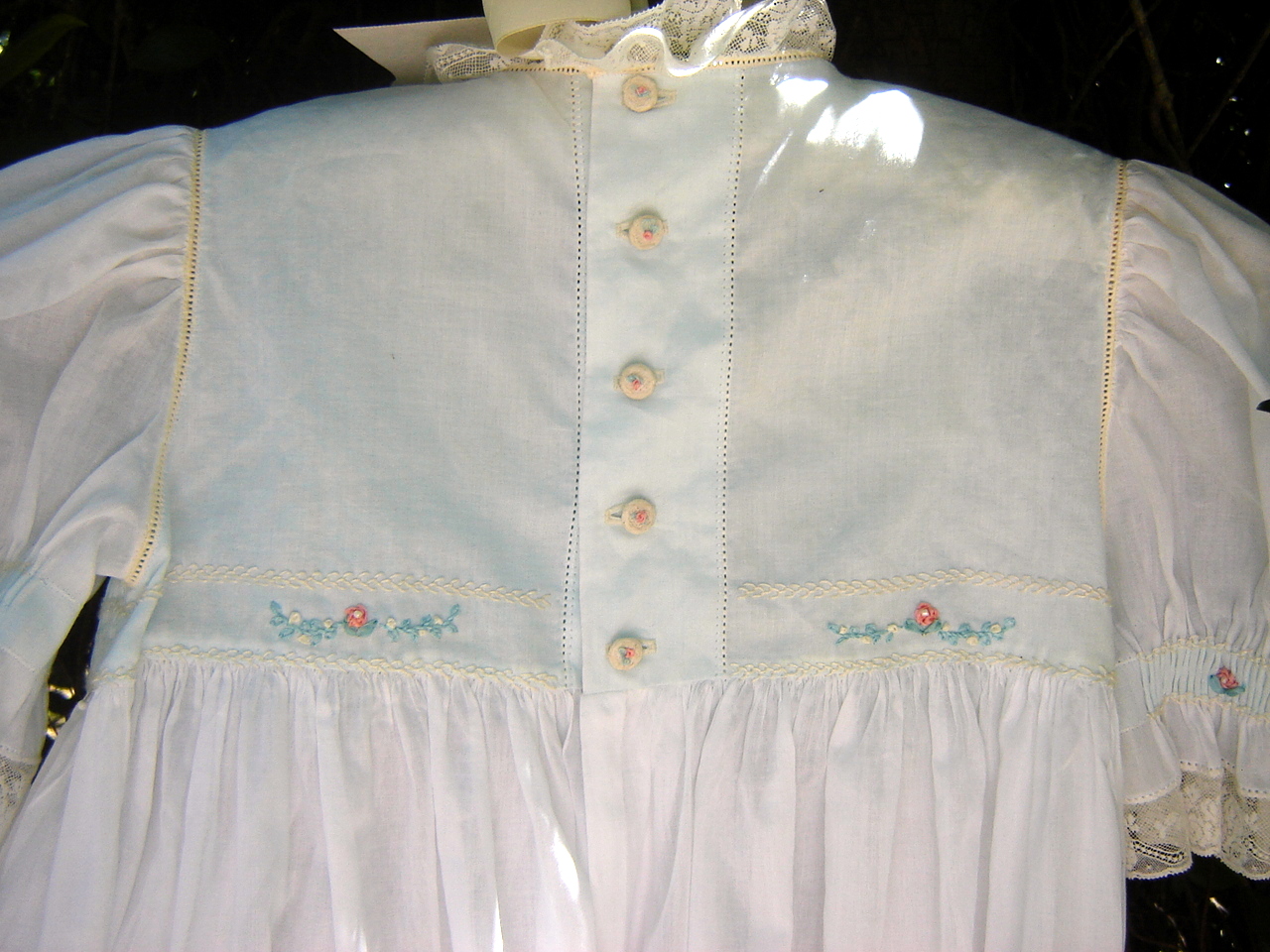
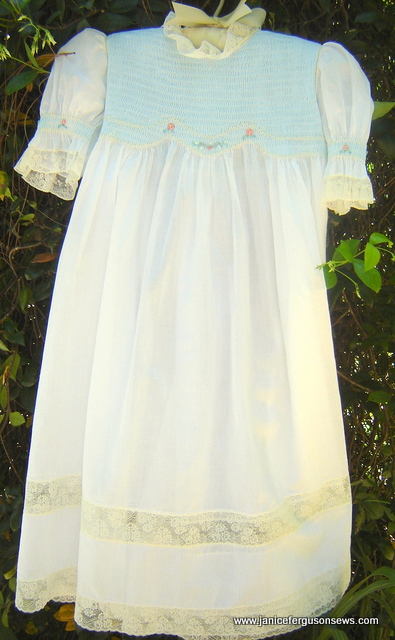
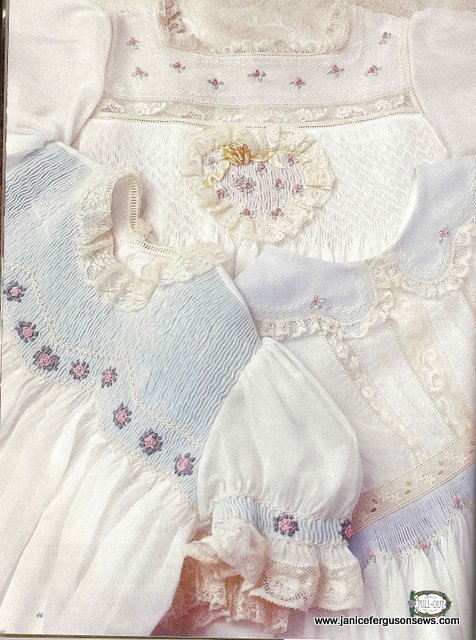
My granddaughter’s shadow smocked Easter dress was inspired by Kay Guiles’ article in Sew Beautiful, Easter, 1998. In fact, the dress is nearly identical to one of the sample garments shown in that article. I take no credit whatsoever for the design or technique.
The only changes made to Laurel’s dress are the addition of lace insertion in the skirt and the substitution of a different embroidery design that included both silk ribbon and DMC floss.
Shadow smocking is a very unique technique and not at all difficult. But I learned a lot that I would like to share with anyone considering such a project. Continue reading →
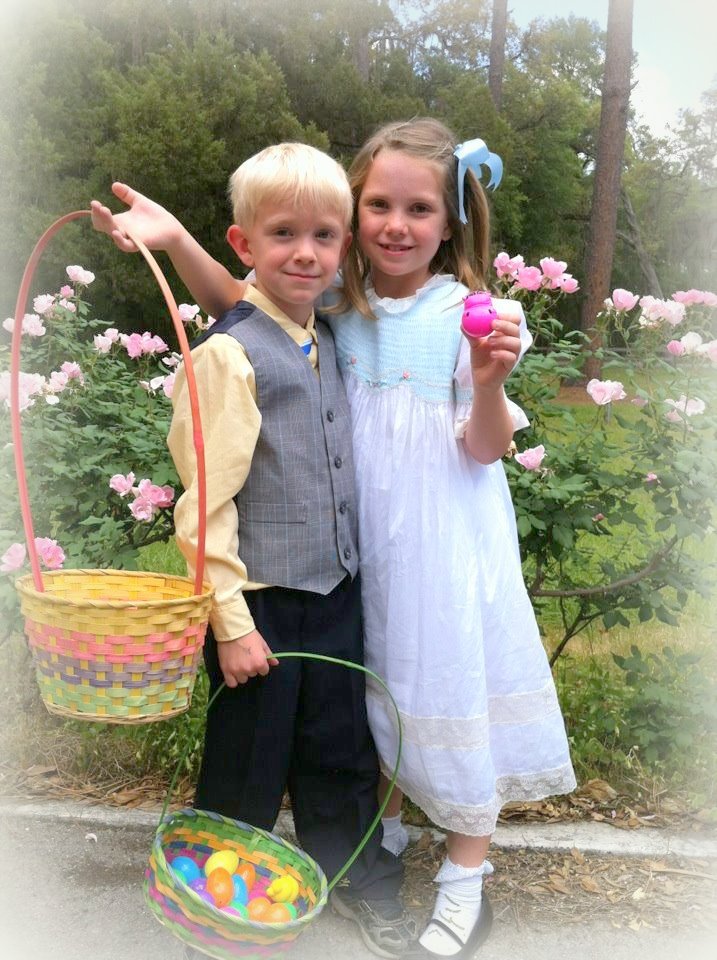
Robert and Laurel after our at-home egg hunt. Somehow, her white shoes were left at home so we had to make do with the black ones that were left at Nana’s house.
Easter is such a joyful holiday, and our family celebration reflected that joy. All were gathered here except for our hard working pilot son who was somewhere in the sky. Lots of activities, lots of fun, and lots of sewing projects added more joy to this special week.  Easter Sunday, of course, was the highlight.
Robert was debonair in his first grown-up, store-bought Easter duds while Laurel was radiant in what might be her last smocked Easter dress. The shadow smocked confection was a joy to stitch.
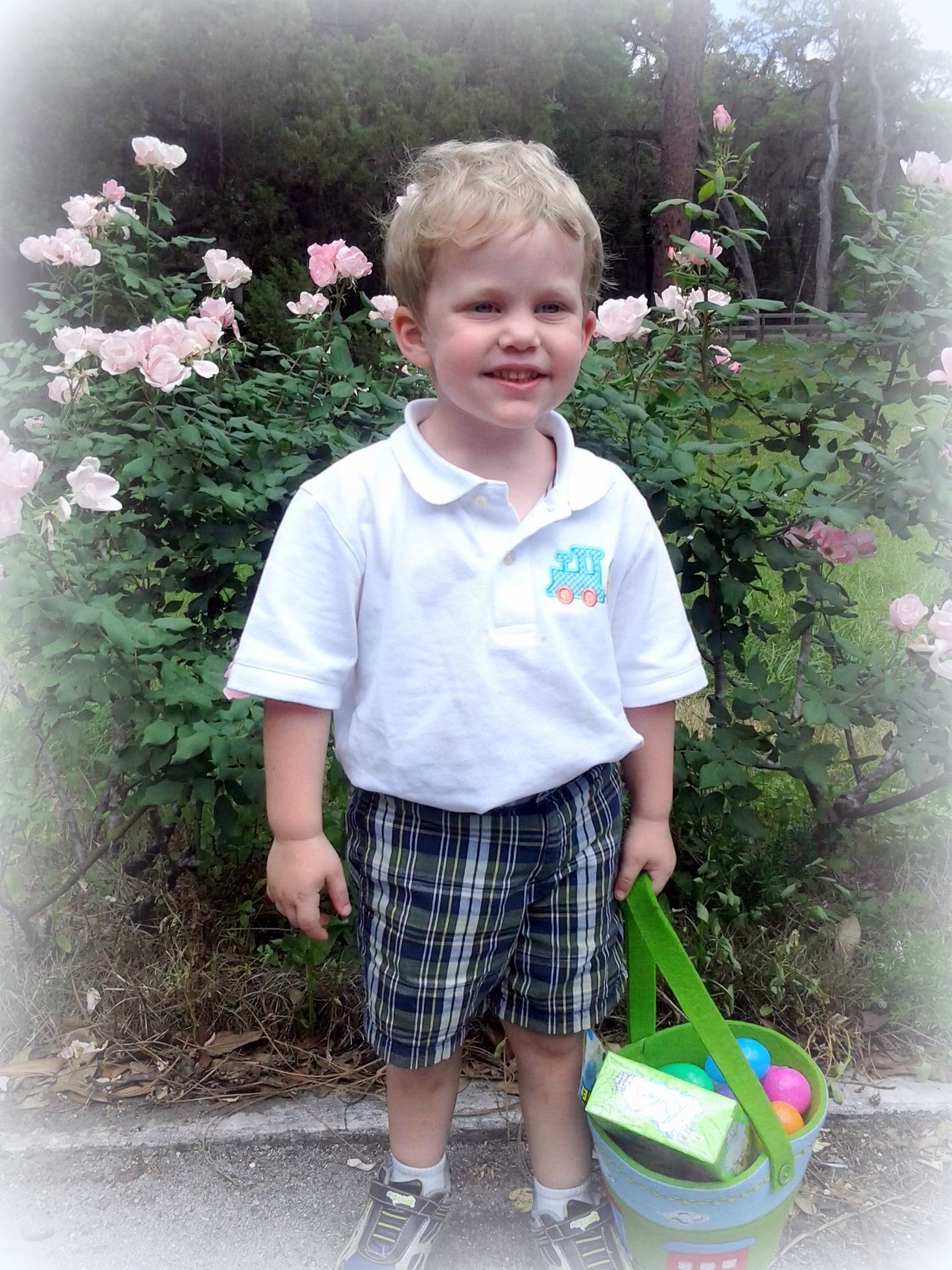
Alastair with his eggs
Alastair was his usual adorable self wearing a shirt he loved. The applique’ featured an engine pulling a train car with a huge Easter egg. I had selected this design because he loves trains. That won his heart. Continue reading →